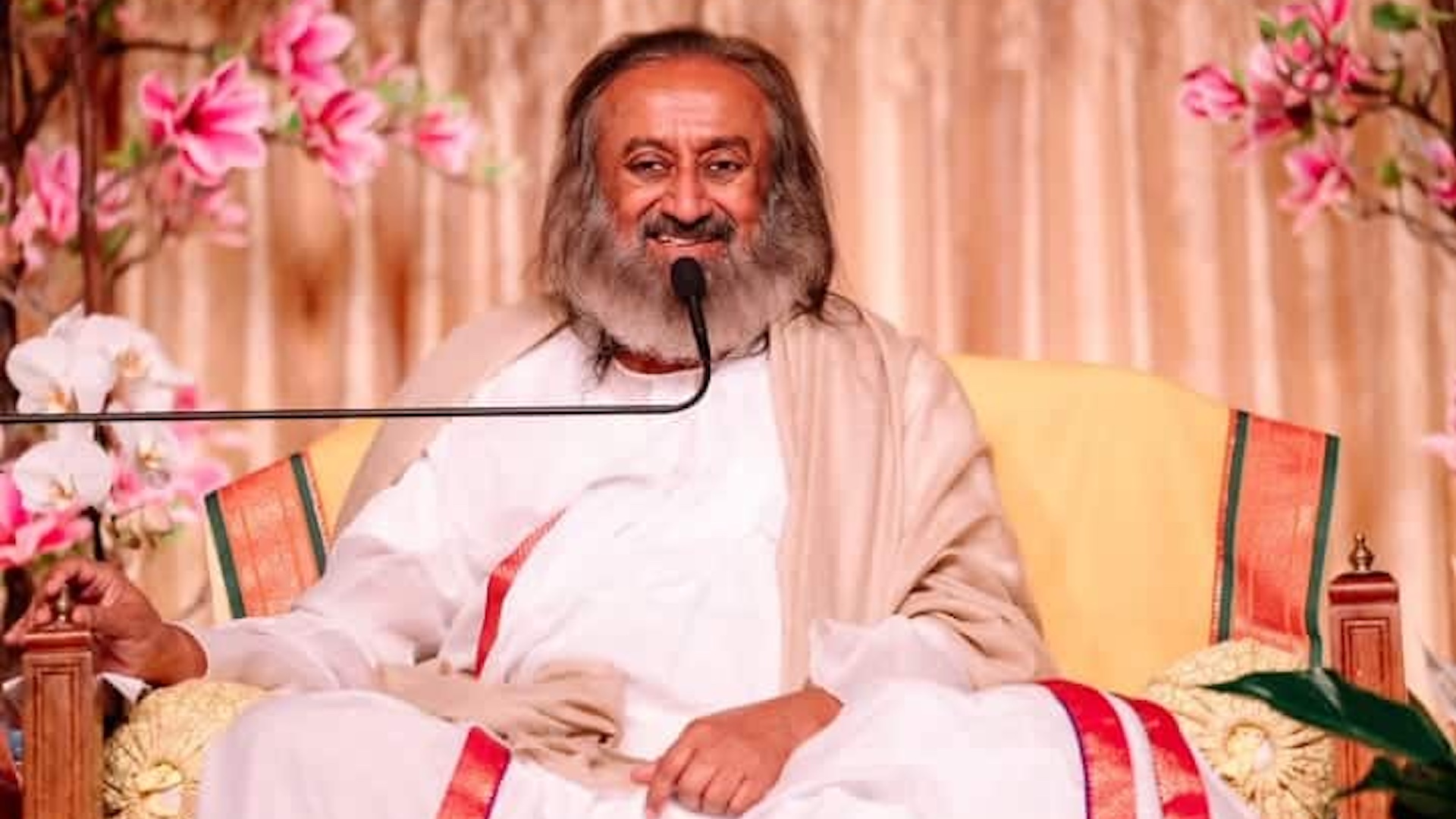
The Essence of Knowing: A Journey from Knowledge to Wisdom
Sri Sri Ravi Shankar's assertion that "Knowledge is to know the trivial. Wisdom is to know the essential" invites us to reflect on the profound distinction between mere information and deeper understanding. In a world inundated with data and superficial facts, this quote serves as a gentle reminder of the importance of discerning what truly matters. The stakes are high; without this discernment, we risk becoming overwhelmed by trivialities, losing sight of the essential truths that guide our lives.
As we navigate our daily existence, the challenge lies not only in acquiring knowledge but in cultivating wisdom. Knowledge can often feel like a collection of disconnected facts, while wisdom embodies a holistic understanding that transcends the surface. This distinction is crucial, as it shapes our decisions, influences our relationships, and ultimately defines our sense of purpose. In an age where information is readily available, the quest for wisdom becomes a vital endeavor, urging us to seek depth rather than breadth in our understanding.
The image / the metaphor
The imagery in Sri Sri Ravi Shankar's quote evokes a landscape where knowledge and wisdom exist on different planes. Knowledge, likened to the trivial, suggests a surface-level engagement with the world, where facts are gathered like pebbles on a beach. In contrast, wisdom, associated with the essential, implies a deeper, more meaningful connection to the core of existence. The verbs chosen—"to know"—indicate an active engagement, inviting us to explore not just what we know, but how we come to know it.
In the speaker's tradition
Within the framework of Sri Sri Ravi Shankar's teachings, the distinction between knowledge and wisdom aligns closely with concepts such as prajna, or intuitive wisdom, and dharma, the path of righteousness. Prajna encourages us to look beyond intellectual understanding, urging us to cultivate an inner knowing that guides our actions and decisions. Dharma, on the other hand, emphasizes living in accordance with the essential truths of existence, reminding us that wisdom is not merely an abstract concept but a lived reality.
In the context of ancient texts, we can draw parallels to the teachings found in the Bhagavad Gita, where Lord Krishna imparts wisdom to Arjuna, guiding him to discern his true duty amidst the chaos of battle. This dialogue exemplifies the journey from knowledge—understanding the mechanics of war—to wisdom—recognizing the deeper moral implications of one's actions. Such teachings resonate with Ravi Shankar's message, reinforcing the idea that wisdom is rooted in a profound understanding of our interconnectedness and responsibilities.
Living the teaching
Consider a modern scenario where an individual is faced with an overwhelming amount of information about health and wellness. They may know the latest diets, exercise trends, and nutritional supplements—this is knowledge. However, wisdom would guide them to discern what truly nourishes their body and soul, leading them to a balanced lifestyle that resonates with their unique needs rather than the latest fads. This distinction can transform their approach to health from a superficial engagement to a holistic understanding of well-being.
In relationships, the difference between knowledge and wisdom can be equally profound. One might know the facts about a partner's preferences, likes, and dislikes—this is knowledge. Yet, wisdom invites us to understand the deeper emotional currents that shape our interactions, fostering empathy and connection. In moments of conflict, it is wisdom that allows us to navigate misunderstandings with compassion, recognizing that the essential truth of our relationships lies in love, respect, and mutual growth.
A reflection
As we contemplate the essence of Sri Sri Ravi Shankar's quote, we are invited to reflect on our own lives: What trivial knowledge have we accumulated that distracts us from recognizing the essential truths that guide our existence? In a world filled with noise, how can we cultivate the discernment needed to prioritize wisdom over mere information? This contemplation can serve as a guiding light, encouraging us to seek depth in our understanding and to embrace the wisdom that lies within.