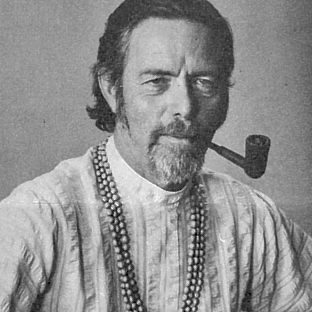
The Art of Effortless Action
Alan Watts's assertion, "The Way is doing nothing and leaving nothing undone," invites us into a profound exploration of action and inaction. At first glance, this paradoxical statement may seem contradictory, yet it encapsulates a deep wisdom about the nature of existence and our place within it. In a world that often equates busyness with productivity, Watts challenges us to reconsider our relationship with effort and surrender, suggesting that true mastery lies in harmonizing our actions with the natural flow of life.
This teaching resonates deeply within the context of Zen philosophy, where the concept of wu-wei, or "non-action," plays a pivotal role. Watts encourages us to embrace a state of being where we are fully engaged yet effortlessly aligned with the rhythms of the universe. By doing so, we can navigate the complexities of life without the burdens of anxiety or overexertion, ultimately leading to a more authentic and fulfilling existence. The stakes are high: to live in accordance with this principle is to unlock a path toward inner peace and clarity.
The image / the metaphor
The imagery in Watts's quote evokes a sense of fluidity and balance. "Doing nothing" does not imply passivity or laziness; rather, it suggests a state of being where one is fully present and aware, allowing actions to arise naturally from the moment. The phrase "leaving nothing undone" complements this notion, indicating that when we are in tune with the flow of life, we can respond to situations with grace and effectiveness, addressing what needs to be done without force or struggle.
In the speaker's tradition
Alan Watts's teachings are deeply rooted in Zen Buddhism, where the principles of wu-wei and the Tao are foundational. Wu-wei, often translated as "non-action," encourages practitioners to align their actions with the natural order of the universe, allowing for a harmonious existence. This concept parallels ideas found in other spiritual traditions, such as the Christian notion of kenosis, which emphasizes self-emptying and surrender to divine will, or the Sufi concept of fana, the annihilation of the self in the presence of the divine.
In his work, "Tao: The Watercourse Way," Watts draws upon the ancient texts of Taoism, particularly the Tao Te Ching, where Laozi speaks of the importance of yielding and flowing with the natural currents of life. The text emphasizes that the wise person does not force their will upon the world but instead acts in accordance with the Tao, the fundamental principle that underlies and unites all things. This alignment with the Tao is what allows for the effortless action that Watts describes, where one is both active and at peace.
Living the teaching
Consider a modern scenario where this teaching might resonate: a busy professional facing overwhelming deadlines. The instinct may be to push harder, to work longer hours, and to exert more effort in an attempt to control the outcome. However, by embracing the principle of wu-wei, this individual might instead take a step back, assess the situation with clarity, and prioritize tasks in a way that feels natural and sustainable. This approach not only alleviates stress but also enhances creativity and productivity, as solutions arise more organically when one is not forcing them.
In the realm of relationships, the application of this teaching can be equally transformative. Imagine a couple navigating a conflict; the tendency might be to argue or to impose one's viewpoint. However, by practicing the art of doing nothing—allowing space for silence and reflection—each partner can listen more deeply and respond with empathy. This non-reactive stance fosters understanding and connection, illustrating how leaving nothing undone can mean addressing the heart of the matter without the need for confrontation or defensiveness.
A reflection
As we contemplate Watts's profound insight, we might ask ourselves: How can I cultivate a sense of wu-wei in my daily life? In what areas do I find myself striving against the current, and how might I instead allow my actions to flow more naturally? This inquiry invites us to explore the balance between effort and surrender, encouraging a deeper understanding of how we can engage with the world around us while remaining grounded in our true selves.



Join the BrightStar Community
Stay connected with daily inspiration, event announcements, and community wisdom