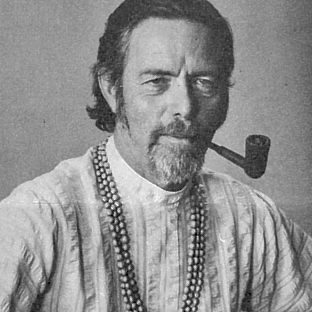
The Unseen Truth: Embracing the Present Moment
Alan Watts's assertion that "Reality is right under your nose" invites us to reconsider our relationship with the present moment. This statement serves as a gentle reminder that the essence of our existence is often obscured by our incessant quest for meaning and understanding. In a world filled with distractions and the constant pull of future aspirations, we may overlook the profound reality that is always available to us, right here and now. Recognizing this truth can transform our experience of life, urging us to cultivate a deeper awareness of the present.
In a society that frequently prioritizes ambition and future planning, Watts's words resonate with a call to mindfulness and presence. The simplicity of the statement belies its depth; it challenges us to engage with our immediate surroundings and experiences rather than getting lost in the complexities of thought. This engagement with reality is not merely an intellectual exercise but a transformative practice that can lead to greater peace and fulfillment. By acknowledging that reality is not a distant concept but an immediate experience, we open ourselves to the richness of life as it unfolds.
The image / the metaphor
At first glance, the phrase "right under your nose" conjures a vivid image of something so close that it is often overlooked. The use of the word "right" emphasizes immediacy and accessibility, suggesting that reality is not something to be sought after in distant lands or lofty ideas, but rather something to be discovered in the mundane aspects of our daily lives. The metaphor implies that we are often blind to the obvious, caught in a web of our own thoughts and distractions, while the truth of our existence waits patiently for our recognition.
Diving deeper into this metaphor, we can see how it reflects the human condition. The act of searching for meaning or enlightenment often leads us away from the very essence of our being. Just as one might overlook a beautiful flower blooming at their feet while gazing at the horizon, we too may miss the beauty and significance of our current experiences. This metaphor encourages us to shift our focus inward and outward, to cultivate a sense of wonder and appreciation for the life that is unfolding in every moment.
In the speaker's tradition
Alan Watts, a prominent figure in the popularization of Eastern philosophy in the West, draws heavily from Zen Buddhism and its teachings on presence and awareness. Central to Zen is the concept of "sunyata," or emptiness, which invites practitioners to let go of preconceived notions and attachments, allowing them to experience reality as it is. This aligns with Watts's assertion that reality is right under our noses; it is an invitation to embrace the present moment without the clutter of our thoughts and desires. The practice of mindfulness, a key aspect of Zen, encourages us to be fully present, recognizing the richness of our immediate experience.
In his works, Watts often references the idea of "prajna," or wisdom, which arises from direct experience rather than intellectual understanding. This wisdom is cultivated through a deep engagement with the present, allowing us to see the interconnectedness of all things. In this light, Watts's quote serves as a reminder that the path to understanding and enlightenment is not found in distant pursuits but in the simple act of being present to the reality that surrounds us. The Zen text "The Heart of the Buddha's Teaching" echoes this sentiment, emphasizing that true understanding comes from direct experience rather than theoretical knowledge.
Living the teaching
Consider a modern scenario where this teaching can be applied: imagine a busy professional caught in the whirlwind of deadlines and meetings. In the pursuit of success, they may find themselves constantly planning for the future, missing the beauty of the interactions and experiences that occur in the present moment. By pausing to breathe and engage fully with their surroundings—whether it be the laughter of a colleague or the warmth of sunlight streaming through a window—they can begin to appreciate the reality that is right under their nose. This simple act of presence can transform their experience of work from a mere obligation to a source of joy and connection.
Another application of this teaching can be found in relationships. Often, we become so preoccupied with our expectations and desires that we fail to see our loved ones for who they truly are in the present moment. By practicing mindfulness and truly listening to our partners, friends, or family members, we can cultivate deeper connections and understanding. This presence allows us to appreciate the nuances of our relationships, fostering a sense of intimacy and love that is rooted in the reality of our shared experiences.
A reflection
As we contemplate Watts's assertion that "Reality is right under your nose," we are invited to reflect on our own lives. What moments have we overlooked in our quest for something more? In what ways can we cultivate a deeper awareness of the present, allowing ourselves to fully engage with the reality that surrounds us? Consider this contemplative question: How might your life change if you committed to being fully present in each moment, recognizing the beauty and significance of what is right in front of you?




Join the BrightStar Community
Stay connected with daily inspiration, event announcements, and community wisdom