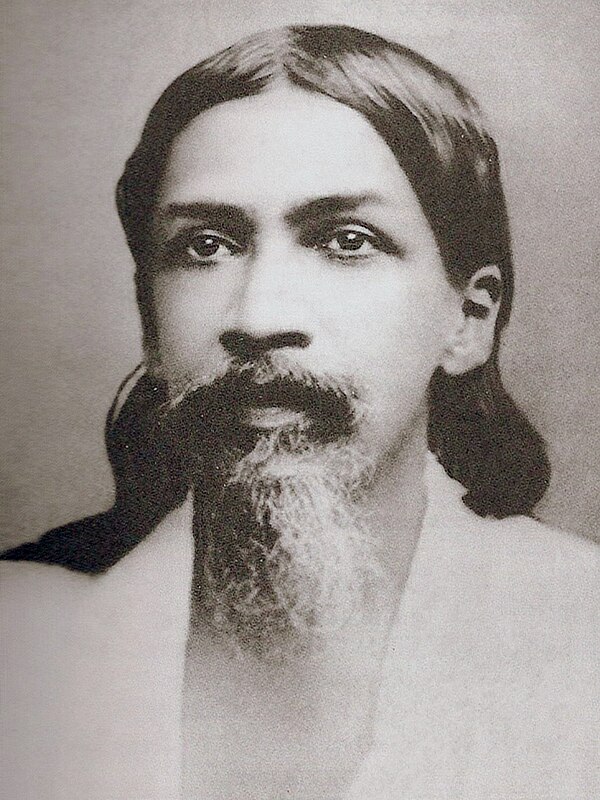
Unveiling the World Beyond Ourselves
Sri Aurobindo's poignant observation, "If we know not the world, it is because we are too full of ourselves," invites us to reflect on the intricate relationship between self-awareness and our understanding of the world around us. This statement suggests that our personal preoccupations and inflated self-conceptions can cloud our perception, preventing us from truly engaging with the richness of life. In a society often dominated by self-interest, this teaching holds profound implications for how we navigate our relationships, our communities, and our own inner landscapes.
At its core, Aurobindo's quote challenges us to examine the barriers we erect through our egos. When we are consumed by our own thoughts, desires, and identities, we risk becoming isolated from the broader tapestry of existence. This self-absorption not only limits our capacity for empathy but also distorts our understanding of reality. By recognizing the ways in which our self-centeredness obstructs our vision, we can begin to cultivate a more expansive awareness that embraces both ourselves and the world in which we live.
The image / the metaphor
The imagery in Aurobindo's quote evokes a sense of entrapment within the confines of one's own mind. The phrase "too full of ourselves" conjures a picture of an individual overflowing with self-importance, unable to see beyond their own thoughts and feelings. This fullness suggests a kind of blockage, where the richness of the external world is obscured by the clutter of personal concerns. The verbs chosen—"know" and "full"—imply an active engagement with the world that is hindered by an overwhelming internal focus.
Diving deeper into the metaphor, we can see that Aurobindo is not merely critiquing self-absorption but is also illuminating the path toward humility and openness. The act of knowing the world requires a certain emptiness, a willingness to let go of the self in order to embrace the vastness of existence. This emptiness is not a void but rather a space of receptivity, where one can encounter the world with fresh eyes and an open heart. In this way, the quote serves as both a warning and an invitation: a warning against the dangers of ego and an invitation to cultivate a more expansive, humble perspective.
In the speaker's tradition
Sri Aurobindo's insights are deeply rooted in the Hindu tradition, where concepts such as dharma and bhakti emphasize the importance of selflessness and connection to the divine. In this context, the idea of kenosis—self-emptying—resonates strongly with Aurobindo's message. To know the world authentically, one must engage in a process of letting go of the ego, allowing for a deeper alignment with one's dharma, or life purpose. This alignment fosters a sense of unity with all beings, transcending the limitations of the individual self.
Moreover, Aurobindo's thoughts echo the teachings found in the Bhagavad Gita, where the notion of selfless action (karma yoga) is presented as a means to transcend the ego. In Chapter 3, verse 19, Krishna advises Arjuna that one should act without attachment to the fruits of their actions, thereby cultivating a sense of humility and service. This perspective reinforces Aurobindo's assertion that true knowledge of the world arises not from self-centered pursuits but from a commitment to the greater good and a recognition of our interconnectedness.
Living the teaching
Consider a modern scenario where this teaching might resonate: a workplace filled with competition and individual ambition. In such an environment, employees may become so focused on personal success that they overlook the collaborative spirit necessary for collective achievement. Aurobindo's quote serves as a reminder that when we prioritize our own accolades over the well-being of our colleagues, we not only hinder our own growth but also stifle the potential of the entire team. By embracing humility and recognizing the value of others, we can foster a more harmonious and productive workplace.
This teaching can also be applied to personal relationships, particularly during moments of conflict. When disagreements arise, it is easy to become entrenched in our own perspectives, believing that our viewpoint is the only valid one. Aurobindo's wisdom encourages us to step back and consider the feelings and experiences of the other person. By doing so, we create space for understanding and compassion, allowing for a resolution that honors both parties. In daily practice, this might involve consciously setting aside our own needs in favor of listening deeply to others, thereby enriching our connections and expanding our understanding of the world.
A reflection
As we contemplate Aurobindo's profound insight, we are invited to ask ourselves: "In what ways am I allowing my ego to cloud my perception of the world?" This question encourages a deep introspection that can lead to transformative insights. By examining our own tendencies toward self-absorption, we can begin to cultivate a more expansive awareness that embraces both our individuality and our interconnectedness with all of life. In this journey of self-discovery, we may find that the world opens up in ways we never imagined, revealing the beauty and complexity that lies beyond the confines of our own selves.






Join the BrightStar Community
Stay connected with daily inspiration, event announcements, and community wisdom