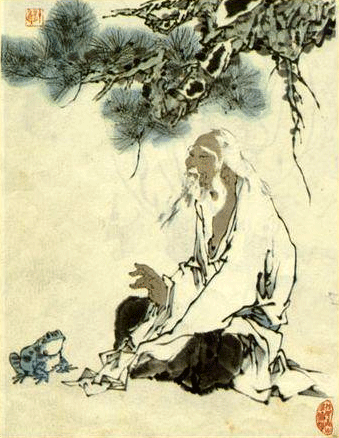
Embracing the Eternal: Chuang Tzu's Insight on Death
Chuang Tzu's profound assertion, "To die but not to perish is to be eternal," invites us to contemplate the nature of existence and the essence of our being. In this statement, he suggests that while physical death is an inevitable part of life, the true essence of who we are transcends this finality. This perspective challenges our conventional understanding of mortality and encourages a deeper exploration of what it means to live meaningfully, even in the face of death.
At its core, this quote speaks to the paradox of life and death, urging us to consider the possibility of continuity beyond our physical form. Chuang Tzu's wisdom resonates with those who seek to understand the interplay between the transient nature of life and the enduring essence of the self. By embracing this duality, we can cultivate a sense of peace and acceptance, recognizing that our true nature is not bound by the limitations of the physical world.
The image / the metaphor
The imagery in Chuang Tzu's quote evokes a sense of duality, where the act of dying is juxtaposed with the concept of not perishing. The verb "to die" signifies the physical cessation of life, while "to perish" implies a complete obliteration of existence. This distinction highlights the difference between the end of our bodily experience and the continuation of our essence. The felt sense of this quote is one of liberation, suggesting that while our physical bodies may fade, our true selves endure in a different form.
In the speaker's tradition
Chuang Tzu's teachings are deeply rooted in the Taoist tradition, which emphasizes the interconnectedness of all things and the importance of aligning with the natural flow of the universe. Concepts such as dharma, or the inherent order of the cosmos, and sunyata, the emptiness that allows for potentiality, resonate with his assertion about eternity. In Taoism, the idea of kenosis—self-emptying or letting go of the ego—also parallels Chuang Tzu's notion of transcending physical death to embrace a more profound existence.
In the text of the Zhuangzi, we find numerous anecdotes that illustrate the fluidity of life and death. One poignant story involves the transformation of a butterfly, where the dream of being a butterfly and the reality of being a human blur the lines between existence and non-existence. This narrative encapsulates the essence of Chuang Tzu's philosophy, suggesting that our identities are not fixed but rather part of a larger, ever-changing tapestry of life.
Living the teaching
Consider a modern scenario where someone faces the loss of a loved one. In the midst of grief, the idea of "dying but not perishing" can offer solace. It encourages the bereaved to reflect on the enduring impact of their loved one’s spirit, values, and memories. This perspective can transform the experience of loss into an opportunity for connection, allowing the individual to honor the essence of the departed while recognizing that love and influence transcend physical absence.
In another application, think about a challenging moment in a relationship where misunderstandings lead to emotional distance. By embracing the teaching of Chuang Tzu, one might approach the situation with a sense of openness and acceptance, recognizing that the essence of the relationship—trust, love, and shared experiences—can endure despite temporary conflicts. This understanding fosters resilience and encourages individuals to navigate difficulties with a sense of continuity and hope.
A reflection
As we contemplate Chuang Tzu's profound insight, we are invited to reflect on our own relationship with mortality and existence. How might embracing the idea of dying but not perishing transform our understanding of life’s challenges and relationships? In what ways can we cultivate a deeper connection to our essence, allowing it to guide us through the inevitable transitions of life?



Join the BrightStar Community
Stay connected with daily inspiration, event announcements, and community wisdom