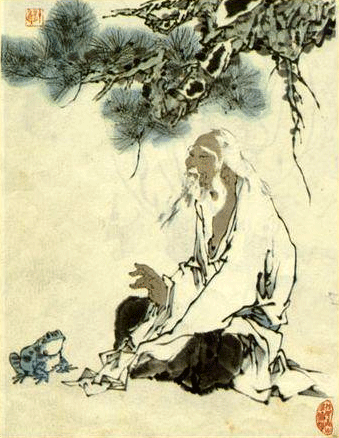
The Embrace of Unity: Wisdom Beyond Distinction
Chuang Tzu's assertion that "the sage embraces things" while "ordinary men distinguish among them" invites us into a profound exploration of perception and understanding. This quote speaks to the essence of wisdom, suggesting that true insight lies not in the separation of experiences, but in the holistic embrace of all that is. In a world often defined by division and categorization, this teaching challenges us to reconsider how we engage with our surroundings and the people in our lives, urging us toward a deeper, more unified perspective.
At its core, this quote reflects a fundamental dichotomy between the sage and the ordinary person. The sage, embodying a state of unity, perceives the interconnectedness of all things, while the ordinary individual tends to fragment reality into distinct parts. This distinction is not merely intellectual; it has profound implications for how we navigate our lives, our relationships, and our spiritual journeys. By embracing the totality of existence, we are invited to transcend the limitations of dualistic thinking and step into a more expansive understanding of our place in the universe.
The image / the metaphor
The imagery in Chuang Tzu's words evokes a sense of warmth and acceptance. To "embrace" suggests a gentle, nurturing action, one that invites closeness and connection. In contrast, the act of "distinguishing" implies a separation, a categorization that can lead to isolation and misunderstanding. The verbs chosen here are significant; they reflect not only the actions of the sage and the ordinary man but also the emotional and spiritual states that accompany these actions. The sage's embrace is one of love and acceptance, while the ordinary man's distinctions may stem from fear or misunderstanding.
In the speaker's tradition
Chuang Tzu's teachings are deeply rooted in the Taoist tradition, which emphasizes the importance of harmony and balance in all aspects of life. Central to Taoism is the concept of "wu wei," or effortless action, which aligns closely with the sage's ability to embrace rather than distinguish. This principle encourages individuals to flow with the natural rhythms of life, allowing for a sense of unity with the Tao, or the fundamental nature of the universe. In this context, the sage embodies a state of being that transcends the dualities that often govern ordinary existence.
In the "Zhuangzi," the text attributed to Chuang Tzu, we find numerous anecdotes illustrating the wisdom of embracing the world as it is. One such story involves a man who, upon encountering a great river, learns to navigate its currents rather than resist them. This narrative serves as a metaphor for the sage's approach to life, highlighting the importance of acceptance and adaptability. By aligning oneself with the flow of existence, one can experience a profound sense of peace and connection, echoing the essence of Chuang Tzu's teaching.
Living the teaching
Consider a modern scenario where this teaching might resonate: a workplace filled with diverse personalities and opinions. In such an environment, the ordinary person may find themselves caught in the web of competition and conflict, distinguishing between colleagues based on their strengths and weaknesses. However, the sage would approach this situation with an open heart, embracing the unique contributions of each individual and recognizing the value of collaboration. By fostering a sense of unity, the sage creates a harmonious atmosphere where creativity and innovation can flourish.
In the realm of personal relationships, the teaching of embracing rather than distinguishing can be transformative. Imagine a moment of conflict with a loved one, where misunderstandings and grievances threaten to create distance. The ordinary response may be to focus on the differences and grievances, leading to further discord. Conversely, the sage would seek to embrace the entirety of the relationship, acknowledging both the joys and challenges. This approach cultivates empathy and understanding, allowing for healing and deeper connection, ultimately enriching the bond shared between individuals.
A reflection
As we contemplate Chuang Tzu's wisdom, we are invited to reflect on our own tendencies toward distinction and separation. In what areas of our lives do we find ourselves categorizing experiences, people, or emotions? How might we begin to embrace the totality of our existence, recognizing the interconnectedness that underlies all things? This contemplation encourages us to explore the possibility of unity in our daily lives, inviting us to step beyond the confines of ordinary perception and into the expansive embrace of the sage.



Join the BrightStar Community
Stay connected with daily inspiration, event announcements, and community wisdom