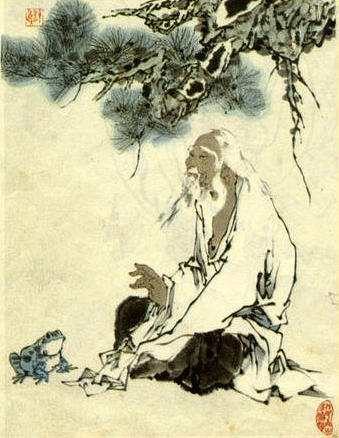
The Weight of Words: Contemplating Chuang Tzu's Wisdom
Chuang Tzu's assertion that "petty speech is cantankerous" invites us to reflect on the nature of our communication and its impact on our relationships and inner peace. In a world often filled with trivial chatter and contentious dialogue, this quote serves as a reminder of the importance of mindful speech. The stakes are high; our words can either foster connection and understanding or breed discord and misunderstanding. By examining the essence of this statement, we can uncover deeper truths about the art of communication and its role in our spiritual journey.
To delve into this quote is to engage with the very fabric of human interaction. Chuang Tzu, a foundational figure in Taoism, encourages us to consider the quality of our speech and its alignment with our inner state. Petty speech, characterized by triviality and quarrelsomeness, distracts us from the profound simplicity that lies at the heart of existence. This contemplation not only challenges us to refine our language but also to cultivate a deeper awareness of the intentions behind our words, urging us to seek harmony rather than conflict.
The image / the metaphor
At its core, the phrase "petty speech is cantankerous" conjures an image of words that are not merely superficial but laden with irritation and discontent. The term "petty" suggests a triviality that belittles the speaker and the listener alike, while "cantankerous" evokes a sense of stubbornness and irritation. This imagery paints a vivid picture of how our words can become a source of friction, leading to unnecessary quarrels and misunderstandings. The verbs chosen here—"is"—imply a state of being, suggesting that such speech is not just an action but a condition that permeates our interactions.
Diving deeper into the metaphor, we can see that Chuang Tzu is not merely critiquing the content of our speech but also its underlying energy. Petty speech reflects a mindset that is often caught in the web of ego and attachment, where the desire to be right or to assert oneself overshadows the pursuit of truth and understanding. This metaphor extends beyond mere words; it speaks to the essence of our communication, urging us to transcend the trivial and engage in a dialogue that nurtures the spirit. In this light, the quote becomes a call to elevate our discourse, to seek the profound rather than the petty.
In the speaker's tradition
Chuang Tzu's teachings are deeply rooted in the Taoist tradition, which emphasizes harmony with the Tao, or the natural way of the universe. In this context, the concept of "wu wei," or effortless action, becomes relevant. Petty speech disrupts the flow of natural communication, leading to conflict rather than harmony. By recognizing the interconnectedness of all beings, Taoism invites us to approach speech with a sense of humility and awareness, aligning our words with the greater rhythm of life. This alignment fosters a sense of peace and understanding, allowing us to communicate from a place of authenticity rather than ego.
In the text of the Zhuangzi, we find numerous anecdotes that illustrate the folly of quarrelsome speech and the wisdom of silence. One such story involves a dialogue between Confucius and Laozi, where the two great sages discuss the limitations of rigid doctrines and the importance of embracing the fluidity of existence. This dialogue serves as a reminder that true wisdom often lies beyond the confines of words, encouraging us to listen deeply and speak mindfully. In this light, Chuang Tzu's quote resonates with the broader Taoist ethos of seeking harmony and understanding through mindful communication.
Living the teaching
Consider a modern scenario where the teaching of Chuang Tzu might apply: a heated discussion among friends about a political issue. As opinions clash and voices rise, the conversation devolves into a quarrel, with each person more focused on defending their viewpoint than on understanding one another. In this moment, the essence of Chuang Tzu's wisdom becomes clear; the petty speech that emerges from frustration and defensiveness only serves to deepen the divide. By recognizing this pattern, individuals can choose to step back, breathe, and approach the conversation with a spirit of curiosity rather than contention, transforming a potential conflict into an opportunity for connection.
In a different context, imagine a relationship where misunderstandings frequently arise due to careless words. A partner may feel hurt by a seemingly innocuous comment, leading to a cycle of blame and resentment. Here, the teaching of mindful speech becomes crucial. By cultivating awareness of the impact of our words and striving for clarity and compassion, we can create a space for healing and understanding. This practice not only enriches our relationships but also aligns us with the deeper currents of Taoist philosophy, where communication becomes a sacred art rather than a source of discord.
A reflection
As we contemplate Chuang Tzu's assertion that "petty speech is cantankerous," we are invited to examine our own communication habits. Are our words fostering connection and understanding, or are they contributing to discord and misunderstanding? In this moment of reflection, consider the following question: How can I cultivate a practice of mindful speech that aligns with my deeper values and promotes harmony in my relationships? This inquiry invites us to explore the transformative power of our words and the potential for deeper connection in our everyday interactions.




Join the BrightStar Community
Stay connected with daily inspiration, event announcements, and community wisdom