The Essence of Now: Embracing Reality as It Unfolds
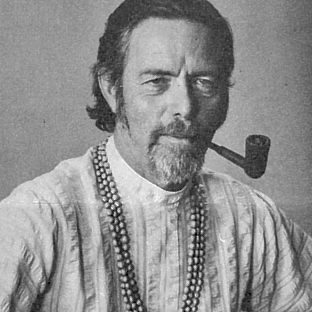
Alan Watts invites us to consider the nature of reality with his succinct assertion: "What is reality? It is whatever's happening — right now." This statement serves as a profound reminder that our existence is anchored in the present moment, urging us to engage with life as it unfolds rather than getting lost in the distractions of past regrets or future anxieties. The stakes of this realization are high; understanding and embracing the present can lead to a more authentic and fulfilling life, free from the burdens of temporal dislocation.
In a world that often prioritizes productivity and future planning, Watts's words challenge us to re-evaluate our relationship with time and existence. The immediacy of "right now" compels us to acknowledge that reality is not a distant concept to be theorized but a living experience to be engaged with. This perspective invites us to cultivate mindfulness, a practice that aligns closely with the teachings of Zen, where the present moment is not just a fleeting instance but the very essence of our being.
The image / the metaphor
Watts's quote employs vivid imagery that encapsulates the fluidity of reality. The phrase "whatever's happening" evokes a sense of movement and dynamism, suggesting that reality is not a static entity but a continuous flow of experiences. The choice of the verb "happening" emphasizes the active nature of existence, inviting us to participate fully in the unfolding of life. This imagery resonates deeply with the Zen understanding of impermanence, where each moment is unique and irreplaceable, urging us to be present and aware.
Diving deeper into the metaphor, we can see that Watts is not merely describing a state of being but offering a pathway to liberation. By recognizing that reality is defined by the present moment, we are encouraged to let go of our attachments to past narratives and future expectations. This liberation from the constraints of time allows us to experience life with greater clarity and openness, fostering a sense of connection to the world around us. In this way, the metaphor of "happening" becomes a call to action, inviting us to engage with life as it is, rather than how we wish it to be.
In the speaker's tradition
Moreover, Watts's emphasis on the present moment echoes the teachings found in the *Dhammapada*, a foundational text in Buddhist literature. In this text, the Buddha states, "All that we are is the result of what we have thought." This highlights the importance of our mental engagement with the present, suggesting that our thoughts shape our reality. By grounding ourselves in the now, we can transform our perceptions and, consequently, our experiences, aligning with the core tenets of both Zen and Buddhist philosophy.
Living the teaching
Consider a modern scenario where this teaching can be applied: a busy professional caught in the whirlwind of deadlines and meetings. In such a context, the tendency is to rush through tasks, perpetually focused on what lies ahead. However, by embracing Watts's insight, this individual can shift their focus to the present moment, finding value in the act of working itself rather than merely the outcomes. This shift not only enhances productivity but also fosters a deeper sense of satisfaction and connection to their work, transforming it from a chore into a meaningful engagement.
Another application of this teaching can be found in interpersonal relationships. Imagine a couple navigating a conflict, each partner preoccupied with past grievances or future fears. By grounding themselves in the present moment, they can engage more authentically with each other, listening deeply and responding to the current emotional landscape rather than rehashing old wounds. This practice of presence can lead to greater understanding and intimacy, illustrating how Watts's teaching can transform not just individual experiences but relational dynamics as well.
A reflection
As we contemplate Watts's assertion that "reality is whatever's happening — right now," we are invited to reflect on our own relationship with the present moment. How often do we find ourselves lost in thoughts of what has been or what might be, neglecting the richness of our current experience? In this light, consider this contemplative question: What would it mean for you to fully inhabit the present moment, embracing it as the only reality? Allow this inquiry to guide your awareness as you navigate the complexities of life, inviting you to discover the profound beauty that exists in the here and now.



Join the BrightStar Community
Stay connected with daily inspiration, event announcements, and community wisdom