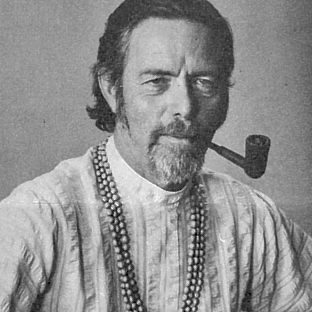
The Art of Being Present: A Journey into Awareness
In the succinct yet profound words of Alan Watts, "Stop. Look. Listen. Be." This invitation to pause and engage with the present moment serves as a gentle reminder of the importance of awareness in our often chaotic lives. In a world that constantly urges us to rush forward, this quote beckons us to embrace stillness and presence, emphasizing that true understanding and connection arise from being fully engaged in the here and now. The stakes are high; without this conscious engagement, we risk drifting through life, missing the richness of our experiences.
Watts's call to "stop" is not merely a suggestion to halt our physical movements but an invitation to quiet the incessant chatter of the mind. To "look" and "listen" is to cultivate a deep awareness of our surroundings and our inner selves, while "be" encapsulates the essence of existence itself. This quote encapsulates a profound teaching that resonates deeply within the Zen tradition, where the act of being present is not just a practice but a way of life. By exploring these four simple commands, we can uncover layers of meaning that invite us to live more fully and authentically.
The image / the metaphor
At first glance, the imagery in Watts's quote is deceptively simple. The verbs "stop," "look," "listen," and "be" evoke a sense of action, yet they also imply a stillness that is essential for true perception. "Stop" suggests a cessation of movement, a moment to pause and reflect, while "look" and "listen" call for an active engagement with the world around us. The word "be" serves as a culmination of these actions, urging us to embrace our existence in its entirety. This sequence of actions creates a rhythm that mirrors the natural flow of life, inviting us to synchronize with it.
Diving deeper into the metaphor, we find that each command represents a layer of experience. "Stop" is the gateway to mindfulness, allowing us to break free from the autopilot mode that often governs our daily lives. "Look" encourages us to observe not just the external world but also our internal landscape, fostering a sense of curiosity and wonder. "Listen" invites us to attune ourselves to the subtleties of life, whether it be the rustle of leaves or the whispers of our own thoughts. Finally, "be" encapsulates the essence of existence, reminding us that our true nature is not defined by our actions but by our presence in the moment.
In the speaker's tradition
Alan Watts, a prominent figure in the popularization of Eastern philosophy in the West, draws heavily from Zen Buddhism and Taoism. His teachings often emphasize concepts such as *sunyata* (emptiness) and *prajna* (wisdom), which resonate deeply with the essence of being present. In Zen, the practice of mindfulness is not merely a technique but a way of embodying the principles of *dharma*, the natural order of the universe. Watts's invitation to "stop, look, listen, and be" aligns seamlessly with these teachings, as it encourages us to engage with the world without the distractions of our conditioned thoughts and beliefs.
In his work, Watts often references the idea of *kenosis*, or self-emptying, which parallels the act of stopping to create space for new insights and experiences. This concept is echoed in various Zen texts, such as the *Heart Sutra*, which speaks to the notion of form and emptiness being interdependent. By embracing the practice of being present, we can cultivate a deeper understanding of ourselves and our relationship to the world, ultimately leading to a more profound sense of connection and peace.
Living the teaching
Consider a modern scenario where this teaching can be applied: imagine a busy day at work filled with meetings, emails, and deadlines. In the midst of this chaos, taking a moment to "stop" can feel revolutionary. By stepping away from the desk, closing your eyes, and taking a few deep breaths, you create a space to "look" at your surroundings with fresh eyes and "listen" to the sounds that fill the air. This simple act of pausing can transform your experience, allowing you to return to your tasks with renewed focus and clarity.
In relationships, the practice of "stop, look, listen, be" can be equally transformative. During a heated conversation, instead of reacting impulsively, you might choose to pause and take a breath. This moment of stillness allows you to "look" at the emotions at play and "listen" to your partner's perspective without the filter of your own judgments. By embodying presence in this way, you create a space for deeper understanding and connection, fostering a more compassionate dialogue that honors both your feelings and those of your partner.
A reflection
As we contemplate the wisdom encapsulated in Watts's quote, we are invited to reflect on our own relationship with presence. How often do we find ourselves caught in the whirlwind of life, neglecting the beauty of the present moment? In what ways can we incorporate the practice of stopping, looking, listening, and simply being into our daily routines? These questions serve as a gentle nudge towards a more mindful existence, encouraging us to embrace the richness of life that unfolds when we are fully present.



Join the BrightStar Community
Stay connected with daily inspiration, event announcements, and community wisdom