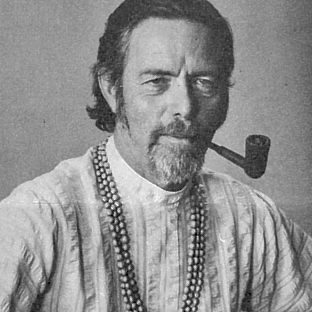
Exploring the Universe Through Our Own Eyes
Alan Watts invites us to consider ourselves as conduits of the cosmos, suggesting that we are not merely observers of the universe but integral parts of its unfolding narrative. When he states, "You are an aperture through which the universe is looking at and exploring itself," he emphasizes the profound interconnectedness of all existence. This perspective challenges the conventional notion of individuality, urging us to recognize our role in the grand tapestry of life. Understanding this concept can transform our perception of identity and purpose, illuminating the path toward deeper awareness and unity.
In a world often dominated by the illusion of separation, Watts' words resonate as a reminder of our shared essence. The idea that we are apertures implies a dynamic relationship between the self and the universe, suggesting that our consciousness is a reflection of a greater whole. This realization can be both liberating and daunting, as it compels us to confront the implications of our interconnectedness. By embracing this perspective, we can cultivate a sense of belonging and responsibility, recognizing that our thoughts and actions ripple through the fabric of existence.
The image / the metaphor
The metaphor of an "aperture" evokes a vivid image of a lens through which light passes, illuminating the world beyond. This choice of words suggests that our consciousness acts as a filter, shaping and refracting the experiences we encounter. The verb "looking" implies an active engagement, as if the universe itself is curious and eager to explore its myriad forms through us. This imagery invites us to consider how our perceptions influence the way we experience reality, highlighting the interplay between observer and observed.
In the speaker's tradition
Alan Watts, a prominent figure in the Zen tradition, draws upon concepts that resonate deeply with the idea of interconnectedness. Central to Zen philosophy is the notion of "sunyata," or emptiness, which suggests that all phenomena are interdependent and lack inherent existence. This aligns with Watts' assertion that we are not separate entities but rather expressions of a unified whole. The concept of "kenosis," or self-emptying, further complements this understanding, as it encourages the relinquishment of ego and the embrace of a more expansive identity that transcends individual boundaries.
In his lectures, Watts often references the teachings of the Tao Te Ching, a foundational text in Taoism that echoes similar sentiments. The Taoist idea of "wu wei," or effortless action, aligns with the notion that by allowing ourselves to be conduits of the universe, we can move harmoniously with the flow of existence. This perspective invites us to let go of the need to control and instead trust in the natural unfolding of life, recognizing that we are part of a larger cosmic dance.
Living the teaching
Consider a modern scenario where this teaching manifests: a bustling city street filled with diverse individuals, each absorbed in their own lives. In this environment, the idea of being an aperture becomes particularly poignant. As we navigate through the crowd, we can choose to see ourselves not as isolated beings but as interconnected threads in a vast tapestry. This shift in perspective can transform our interactions, encouraging us to approach others with empathy and curiosity, recognizing that each person is a unique expression of the same universal consciousness.
In a more intimate context, this teaching can profoundly impact our relationships. Imagine a moment of conflict with a loved one, where misunderstandings and emotions run high. By embracing the idea that we are apertures through which the universe explores itself, we can cultivate a sense of compassion and understanding. Instead of viewing the disagreement as a personal affront, we can recognize it as an opportunity for growth and connection, allowing the experience to deepen our bond rather than fracture it. This practice of seeing ourselves as part of a larger whole can transform our approach to conflict, fostering a sense of unity even in challenging moments.
A reflection
As we contemplate Watts' profound assertion, we are invited to reflect on our own experiences of interconnectedness. How do we perceive ourselves in relation to the universe? In what ways can we embrace our role as apertures, allowing the cosmos to explore itself through our unique perspectives? This contemplative question encourages us to delve deeper into our understanding of identity and purpose, inviting us to engage with the world around us in a more meaningful and connected way.




Join the BrightStar Community
Stay connected with daily inspiration, event announcements, and community wisdom