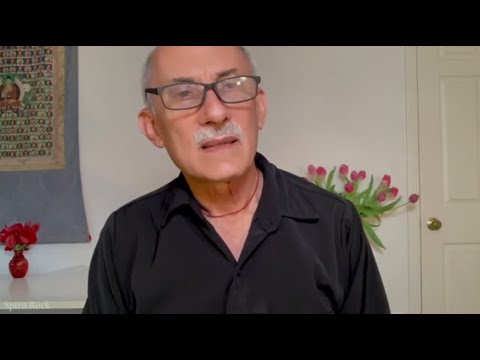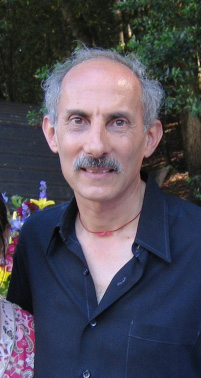
This 24-minute guided meditation teaches practitioners to establish calm and ease by anchoring attention to the sensations of natural breathing, then expanding that gentle, loving awareness to acknowledge and release thoughts, emotions, and sensations as they arise. The practice models a Buddhist approach to meditation that begins with stabilizing the mind through breath focus, then transitions into vipassana (insight practice) where you observe the full spectrum of human experience—fear, joy, planning, sadness—without struggling against it. The core insight is that awareness itself remains spacious and kind even as experiences rise and fall.
Why Breath Is the Most Reliable Anchor for a Wandering Mind
The meditation opens with an invitation to find a comfortable, grounded posture. Kornfield emphasizes establishing literal and energetic roots: "feel the pull of gravity that connection of the buttocks and the legs and the feet the chair or the floor into the earth below and imagine your feel or sense that you have roots like a great tree like a redwood energetic roots that go down from your body into the earth strong supportive roots" (175–202s). This embodied grounding matters because it locates the practice in the body before the mind begins to wander.
The breath then becomes the primary object of attention. Rather than forcing the breath or controlling it, Kornfield guides practitioners to notice where they feel it most naturally: "notice where you feel it most directly coolness in the nostrils swirling tingling in the back of the throat or perhaps the rise and fall of chest or belly" (261–273s). The specificity here is practical—if you cannot feel the breath in the nostrils, the belly is an equally valid anchor. Some practitioners benefit from placing a hand on the belly to feel the rise and fall directly (520–527s).
What makes the breath a superior anchor compared to, say, a mantra or visualization, is its continuous availability and its tie to the nervous system. Each breath is fresh; you cannot memorize it or phone it in. This freshness keeps attention genuinely present rather than drifting into automatic recitation.
How to Invite Calm Without Forcing It
A subtle but essential instruction comes early: "with each breath invite a quality of calm or ease you can even say it as a whisper in the mind breathing in and out calm ease" (317–325s). Notice the word invite—not command. The breath itself, when given gentle attention, naturally produces a settling effect. The verbal cue ("calm," "ease") acts as a soft suggestion, not a demand.
Kornfield also places calm within a larger context: "you are establishing yourself in loving awareness the loving witness of the breathing the movement of the body" (484–497s). The loving awareness is not a separate achievement; it is the natural byproduct of attending to something—breath, sensations—with kind attention. Calm emerges not from strain but from surrender to what is already happening.
The nervous system responds to this approach because it signals safety. A clenched jaw, tight shoulders, and shallow breathing all reinforce a stress response. By consciously releasing tension in the face and shoulders early in the practice (112–159s), you send the vagus nerve a signal that the threat level is low, allowing the parasympathetic nervous system to engage. The breath mirrors this: as the body settles, breathing naturally becomes slower and softer without conscious effort.
What Happens When Your Attention Wanders (And Why That's Not Failure)
The meditation does not assume your mind will stay on the breath. Instead, it acknowledges that attention will wander and provides a clear protocol: "when the attention wanders quite gently and kindly" (366–374s) you simply notice you have wandered and return. This is not a correction or a problem—it is the practice itself.
The instruction becomes more sophisticated in the second half. After establishing some steadiness with the breath, Kornfield opens the field of awareness to include all arising experience: "now to vipassana or to the loving awareness practice of whatever arises" (808–817s). This is a deliberate shift from concentration practice (shamatha) to insight practice (vipassana). The breath remains the baseline, but now emotions, thoughts, and sensations become objects of mindful attention rather than distractions to be pushed away.
When a strong experience pulls attention away—sadness, joy, planning, longing—the instruction is to "name where you've gone name the wave of experience that has pulled your attention to it thinking planning sad sad remembering remembering excitement excitement or pleasure or painful sensations in your body" (899–946s). The act of naming transforms the experience. Instead of being lost in thought, you create distance: you observe "thinking" rather than being entirely consumed by it.
Kornfield's language here is crucial: "as if to bow to it" (946–954s). There is no contempt for the mind's wandering, no judgment. The bowing gesture is one of respect and acknowledgment. This stance prevents what practitioners sometimes call "spiritual bypassing"—the attempt to transcend emotion or difficulty by denying it. Instead, the meditation asks you to feel the full humanity of your experience.
How Naming Allows Experience to Dissolve Naturally
One of the most useful insights in this practice is that "doesn't last that long the thoughts or memories will dissolve emotion when acknowledged will rise like a wave or a time and pass away" (965–981s). This is not metaphorical. When you name an emotion or thought with steady, kind attention, its grip loosens. A grief that seemed permanent when you were completely identified with it becomes a wave that has a beginning, a middle, and an end.
The mechanism here is attention itself. Consciousness, when turned toward an experience with interest rather than resistance, naturally changes the experience. This is not suppression; it is the opposite. By fully acknowledging what is present—"sad," "longing," "fear"—you allow it to complete its arc and pass.
This pattern repeats throughout the meditation: you establish calm with the breath, a strong experience arises, you name it with loving awareness, it dissolves or integrates, and you return to the breath. Over time, practitioners recognize that "you are the loving awareness itself spacious and kind witnessing the breath and witnessing all of the human experiences that rise and fall around this ever-changing breath" (1210–1225s). The Self is not the content of experience (the thought, the emotion); it is the vast awareness in which all content appears and disappears.
Why This Practice Works in the Midst of Life
Kornfield frames the meditation within real life: "just here and now this evening in the midst of everything going on in your life in the world you take your seat halfway between heaven and earth" (46–52s). The phrase "halfway between heaven and earth" suggests a balance—neither lost in distraction nor trying to escape to some spiritual bypass realm, but present in the actual, embodied moment.
The teaching on interconnection adds another layer: "we are exchanging air this biosphere with all of life and our body is doing it as we breathe calm ease and as you feel each breath receiving it with a mindful kind attention" (382–405s). The breath is not just your personal oxygen exchange; it connects you to the forests, the oceans, the creatures, and all people. This recontextualizes breath practice from individual ego-maintenance to participation in a living whole.
In this framework, calm is not a retreat from the world's difficulty; it is a return to steady awareness in the midst of it. "You sit like the buddha that you are calm and steady in the midst of all things" (1066–1081s). This phrasing is important: you do not become a Buddha. You sit as the Buddha you already are—recognizing that the capacity for steadiness and kindness is intrinsic to awareness itself.
Where to Go From Here
This practice is foundational and can be used daily or whenever you need to reset your nervous system and reconnect with clear awareness. The progression Kornfield offers—from breath stabilization to emotional acknowledgment to resting as awareness itself—maps onto traditional Buddhist training while remaining accessible to complete beginners. If you find the practice helpful, you might explore longer sitting sessions (30 or 45 minutes) to allow deeper settling, or you might bring the same quality of gentle, loving attention to daily activities like walking, eating, or listening to others. The core skill—naming experience without identifying with it, and returning to your anchor—applies everywhere. For those interested in deepening further, Jack Kornfield's work on Insight Meditation and the integration of Buddhist psychology with modern contemplative science offers rich terrain for continued study.